
How to Respond to a Demand Letter in Kenya | How to Write A Demand Letter: Legal Strategy, Format, and Winning Tactics
A demand letter is one of the most critical pre-litigation documents in Kenya, often marking the transition from informal dispute resolution to formal legal enforcement. It is not merely a warning—it is a calculated legal move designed to compel compliance, assert rights, and create a documented record of a dispute. Because of its significance, how we respond to a demand letter can directly influence the outcome of the matter, whether through negotiation, settlement, or litigation.
When properly handled, a response to a demand letter becomes a powerful strategic tool. It allows us to clarify facts, challenge inaccuracies, assert our legal position, and demonstrate readiness to defend our interests. More importantly, it signals to the opposing party that we are informed, prepared, and capable of pursuing or defending legal action. Courts in Kenya often consider pre-litigation conduct when assessing disputes, meaning a well-structured response can strengthen our credibility and position from the outset.
A poorly handled response—or worse, no response at all—can escalate the situation unnecessarily, weaken our legal standing, and expose us to avoidable risks. For this reason, every response must be deliberate, professional, and supported by evidence. It must also align with Kenyan legal principles and procedural expectations, ensuring that we not only protect our rights but also position ourselves for the most favorable resolution possible [2]. At AWK Advocates, we emphasize that this stage is often where legal disputes are won or lost before they even reach court.
Understanding a Demand Letter in Kenya
A demand letter is a formal legal notice issued by one party to another asserting a claim and requiring a specific remedy within a defined period. If the demand is not met, the sender may proceed with legal action. These letters are common in disputes involving debt recovery, breach of contract, land disagreements, employment disputes, and professional negligence.
Beyond being a warning, a demand letter is also a negotiation tool. It signals seriousness while inviting the recipient to resolve the matter amicably. Courts in Kenya often expect parties to attempt resolution before litigation, making the response to such a letter critically important. It also serves as evidence of notice, meaning failure to respond properly can later be used against a party in court proceedings.
Immediate Actions After Receiving a Demand Letter
1. Conduct a Forensic Review of the Letter
The first step is a detailed and careful review of the demand letter. This is not a surface-level reading but a thorough legal analysis of every element presented. We examine the identity of the sender and confirm whether they have the authority to issue the claim. We then analyze the legal basis of the allegations, the specific remedy being sought, and the deadline provided for compliance.
Understanding these elements helps us determine the seriousness of the claim and identify any weaknesses or inconsistencies. A proper review ensures that our response is accurate, relevant, and strategically aligned with the facts. At AWK Advocates, we treat this stage as a legal risk assessment phase because it determines the entire response strategy.
2. Preserve All Evidence and Communication
Once the letter has been reviewed, the next critical step is preserving all relevant evidence. This includes contracts, invoices, receipts, emails, bank records, and even informal communications such as WhatsApp messages and SMS logs.
This documentation is essential because it forms the foundation of our response. Without evidence, even a strong legal position can be weakened. Proper record-keeping ensures that we can support our claims, challenge inaccuracies, and defend ourselves effectively if the matter escalates to court or arbitration proceedings.
3. Assess Legal Validity of the Claim
Not every demand letter represents a valid legal claim. We must carefully evaluate whether the claim has a solid legal foundation under Kenyan law.
This involves confirming whether:
- A valid contract exists
- Obligations were clearly defined
- There is actual breach or non-performance
- The claim is within limitation periods
- The amount demanded is accurate and justified
This step is crucial because it determines whether we should reject, negotiate, or accept the claim. A proper legal assessment helps avoid unnecessary liability or premature settlement.
4. Avoid Emotional or Informal Responses
One of the most common mistakes is responding emotionally or informally. A demand letter is a legal matter and must be handled with professionalism, structure, and legal precision.
Responding through casual communication channels or verbal statements can lead to unintended admissions that may be used against us in court. Every response must therefore be written, reviewed, and legally structured. At AWK Advocates, we always ensure responses are carefully drafted to protect legal interests and prevent avoidable exposure.
The Ideal Structure of a Response to a Demand Letter
A strong response follows a clear and disciplined format that reflects both professionalism and legal awareness.
1. Acknowledgment of Receipt
We begin by formally acknowledging receipt of the demand letter. This demonstrates seriousness and engagement without admitting liability. It also establishes a professional tone and helps maintain control of the communication process.
2. Without Prejudice Clause (Strategic Shield)
Including a “without prejudice” clause is essential in protecting our position. It ensures that settlement discussions cannot be used against us as admissions in court. This allows open negotiation while preserving legal defenses.
3. Factual Clarification and Corrections
Demand letters often contain inaccuracies or incomplete information. We address these directly by clarifying facts, correcting errors, and providing missing context.
Supporting documents such as contracts, receipts, or correspondence are attached where necessary to strengthen credibility and reinforce our legal position.
4. Legal Position Statement
We clearly outline our legal stance. This is one of the most important sections of the response because it defines the direction of the dispute.
Whether we deny the claim, partially accept it, or conditionally agree, the position must be legally supported and fact-based. This section signals preparedness and legal awareness to the opposing party.
5. Request for Further Particulars (If Necessary)
If the demand letter lacks clarity or detail, we formally request additional information. This prevents responding to vague or unsupported allegations and places the burden on the claimant to substantiate their claims.
6. Settlement or Counter-Proposal
Where appropriate, we propose settlement options such as reduced payment, structured instalments, or alternative dispute resolution methods.
A well-prepared proposal can prevent escalation, reduce legal costs, and promote faster resolution.
7. Defined Next Steps and Timeline
We conclude by setting clear expectations for future communication. This includes deadlines for response and outlining possible next steps if the matter remains unresolved.
This ensures control of the dispute timeline and prevents unnecessary delays or tactical pressure from the opposing party.
Strategic Response Scenarios
When the Claim Is Weak or Unfounded
We firmly reject the claim and highlight legal, factual, or procedural weaknesses.
When Liability Exists but Terms Are Disputed
We acknowledge partial responsibility while negotiating fair and reasonable terms.
When the Claim Is Valid
We focus on structured settlement, compliance, and proper documentation to prevent future disputes.
Advanced Legal Strategy: Turning Defense into Leverage
A response to a demand letter is not just defensive—it is strategic. It can shift negotiation power, influence settlement outcomes, and reduce litigation risk.
At AWK Advocates, we treat every response as a leverage tool to protect client interests while maintaining legal advantage.
Common Mistakes That We Eliminate
Ignoring a demand letter, responding emotionally, failing to attach evidence, or making premature admissions can significantly weaken a case.
Each mistake reduces credibility and increases exposure to legal action.
Legal Framework Supporting Demand Letter Responses in Kenya
Our approach aligns with the Civil Procedure Act and Civil Procedure Rules, which encourage pre-litigation dispute resolution.
Courts in Kenya often favor parties who demonstrate reasonableness and willingness to resolve disputes before litigation begins.
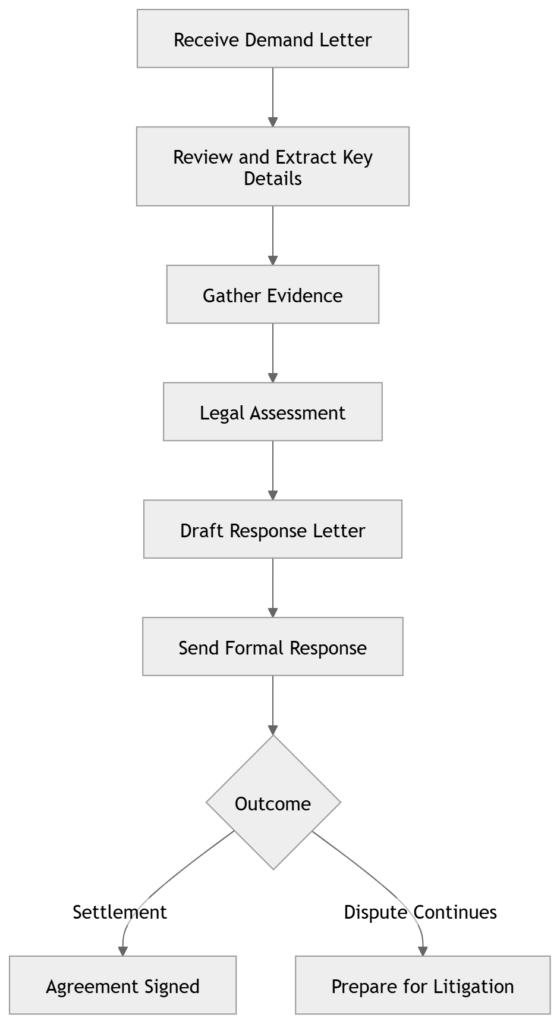
Sample Professional Response Framework
A professional response includes acknowledgment, legal protection, factual clarification, evidence attachment, and a structured position statement.
It may also include settlement proposals and defined timelines for resolution.
Consequences of Ignoring a Demand Letter
Failure to respond can lead to immediate legal proceedings, financial liability, and reputational damage.
Courts may interpret silence as bad faith, which can negatively affect legal outcomes.
How to Write A Demand Letter
Responding to a demand letter in Kenya is not simply a procedural step—it is a defining moment in the lifecycle of a dispute. The manner in which we respond can determine whether the matter is resolved efficiently or escalates into costly and time-consuming litigation. A well-crafted response demonstrates professionalism, legal awareness, and strategic intent, all of which are critical in influencing the direction of the dispute.
By approaching the response with clarity and precision, we create an opportunity to control the narrative, challenge weak claims, and negotiate from a position of strength. Even in situations where liability exists, a structured and thoughtful response allows us to minimize exposure, propose workable solutions, and preserve important relationships where necessary.
Ultimately, the goal is not just to reply, but to respond effectively. This means combining legal reasoning, factual accuracy, and strategic communication into a single, cohesive document. When done correctly, a response to a demand letter becomes more than a defense—it becomes a tool for resolution, leverage, and long-term legal protection. It ensures that we remain proactive rather than reactive, and that every step taken aligns with achieving the best possible outcome.
At AWK Advocates, we believe that this stage is where legal outcomes are shaped—and handled correctly, it can prevent unnecessary litigation entirely.